
An Orlando bedroom works against the climate as much as it works for the people in it. Afternoon humidity sits in a closed room even when the air conditioner has been running since lunch. Night air can feel cool and dry. A primary mattress takes that swing every night of the year. A guest mattress sits made for weeks, then takes a theme-park week of getting in and out. Start from that use, then match a family.
If you already know the room, write sales@tabaconda.com after you measure.
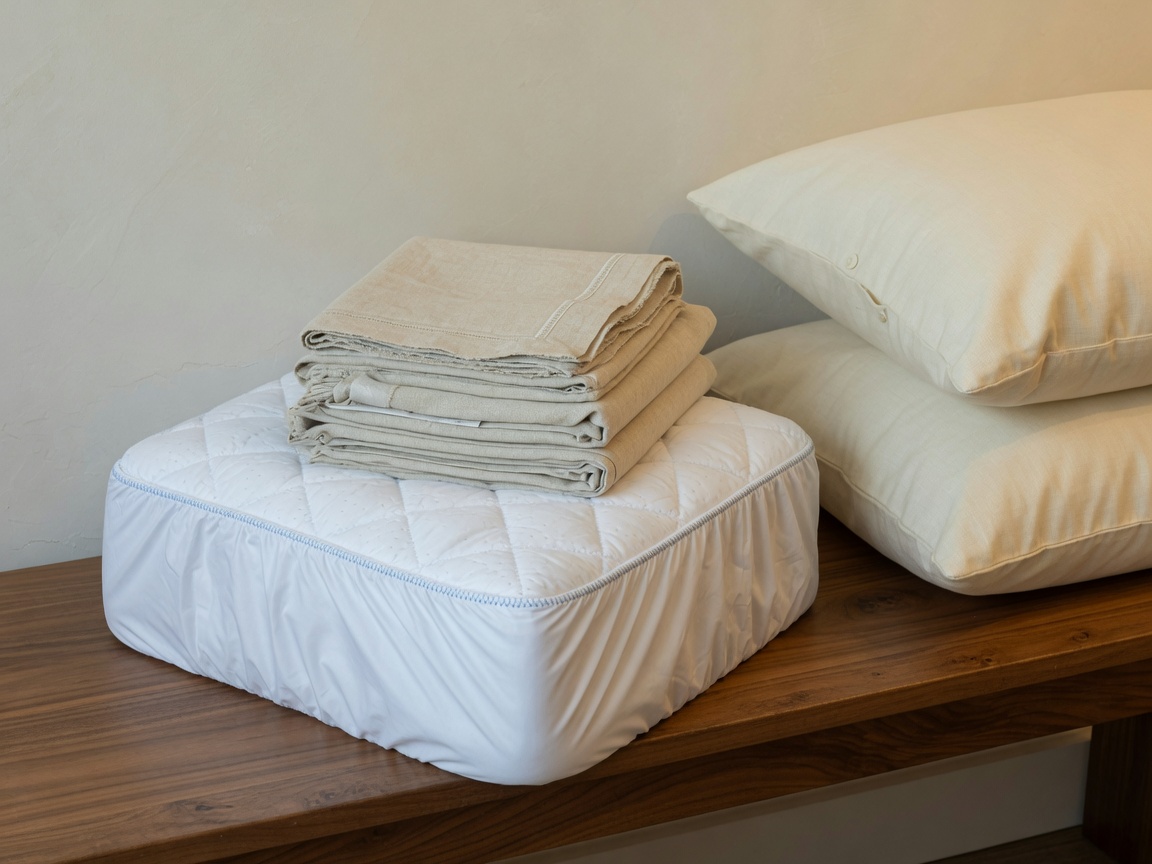
Everyday sleep versus a guest mattress that sits made for weeks
If the bed is the one you come back to after an I-4 commute, after a Lake Nona shift, or after a downtown evening, it is an everyday surface. Same people, same hours, year-round. The room is often shut while you are at work. In August that closed room has been cooled all afternoon; at ten at night it can feel different than it did at two. The mattress has to be livable on a quiet Tuesday, not only on the night you first lie down.
A guest mattress is a short, intense shift. Cousins drive in from Tampa. Grandparents fly in for five park days. Friends take a week off and sleep in the room off the pool. The bed may sit unused from one holiday to the next, then work hard for six nights. More getting in and out. More weight on the edge as people sit to take off park shoes. Sheets that were perfect in April can feel different if the guest-room air conditioner was left off while the rest of the house ran.
Theme-park weeks stack more traffic than a quiet Tuesday. People go to bed later. They get up earlier. They nap in the afternoon when the storms roll through. Write which of those rooms you have, primary, guest, or a spare that used to be an office, before you pick a feel.
Florida humidity and a closed room on air conditioning all afternoon
Central Florida is humid subtropical. The Florida Climate Center publishes average relative humidity from National Centers for Environmental Information station data. For Orlando, morning humidity averages 88 percent across the year; afternoon humidity averages 55 percent. July mornings sit at 90 percent. August and September mornings sit at 91 percent, with afternoon readings around 61 percent in those months.
Those are outdoor station normals, not a reading from your closet. They still explain why a closed guest room on International Drive, in a Lake Nona apartment, or off a pool in a neighborhood house does not behave like a showroom floor. Moisture is in the air. The air conditioner cycles. A room that is shut from breakfast until evening is a different climate than a room you walk through all day.
National Weather Service forecasts for Central Florida talk about summer the same way residents do: hot, humid, and often stacked with afternoon storms. The matching question for a mattress is airflow around it. A foundation that already sits in the room, platform, rails, or slats, moves air the way that frame allows. A solid platform deck and a slatted rail bed are different homes for the same foam. Ask which foundation the mattress family is meant to live on.
Ask the family, then say what is already under the bed. Coil counts, foam densities, and warranties belong to a specific product you will name later.
Foundation: platform, rails, or slats
The foundation is a matching question, not a leftover. In a Florida house the guest room off the pool is often the room closest to outdoor air when a slider is open. The frame is part of the climate story. Keep the mattress off a humid floor.
Platform. A low deck, often without a box. It sits well in a room that already has a headboard on the wall. Some mattress constructions want more air under them than a solid deck gives. That is a question to ask, not a defect to assume.
Rails. Side rails, sometimes a footboard, with slats or a box between. Ask how the rails join and whether the slat gap is close enough for the mattress you want. A rail frame with a footboard also changes how you make the bed in a tight apartment.
Slats. Gap spacing matters. Too-wide slats let a foam bed sag between the boards. If you can see the slats, measure the gap and write it in the note. A bunkie board or a closer slat set is a foundation change, not a mattress family.
Adjustable base. A family to ask about when two sleepers want different head or foot positions. If the primary bedroom already has an adjustable base, say so; the mattress has to live on it.
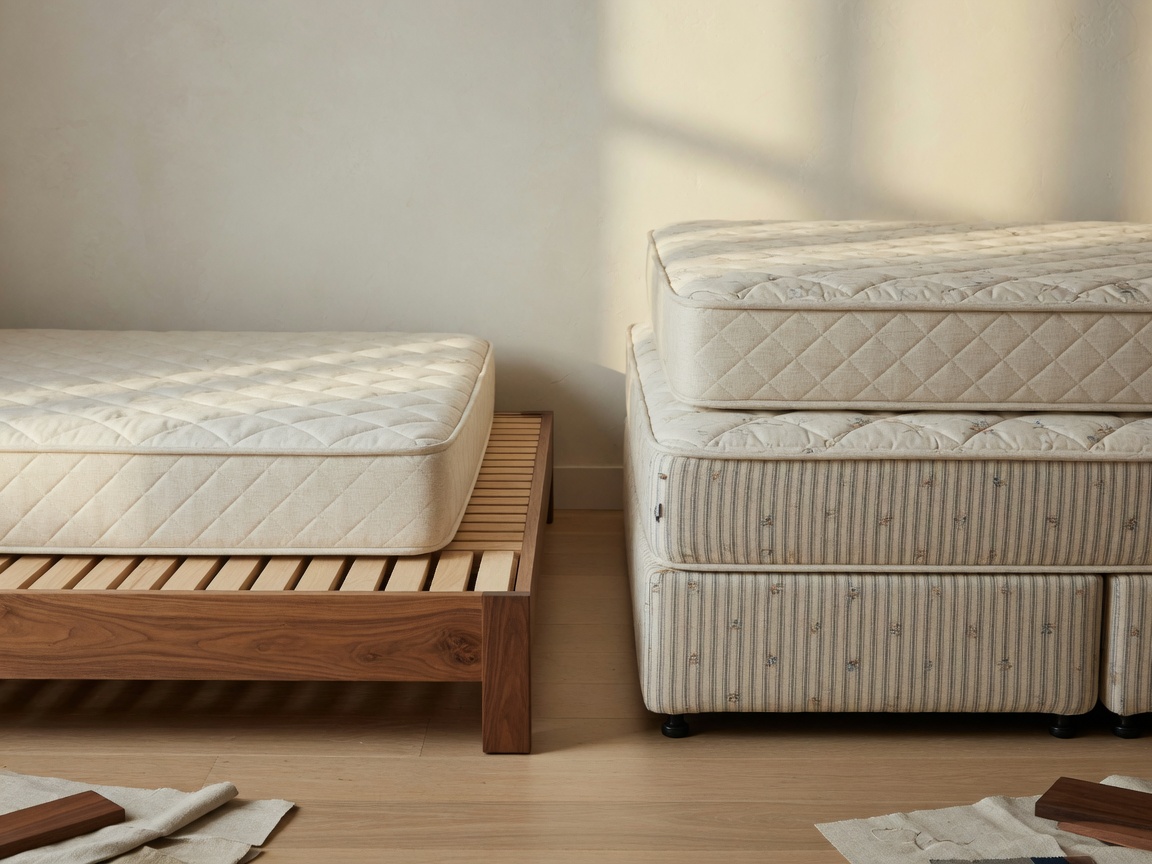
When the open question is the old box versus a platform deck, read mattress versus box-spring.
Measure the room, the stair, and the door swing
Tape the room. Width, length, and the swing of the bedroom door. A queen that “fits the wall” still has to leave walking space for a nightstand and a dresser. Measure the closet door too if it opens into the same space. In a downtown condo or a Lake Nona apartment, the bedroom is often the second bedroom off a short hall; the hall is part of the path.
Then measure the path in. Second-floor walk-ups in older Orlando neighborhoods, College Park, downtown edges, some Winter Park streets, often have a stair turn, a railing, and a landing that a boxed queen has to rotate through. Newer Lake Nona and corridor apartment buildings may have an elevator; still measure the elevator door and the corridor turn. A mattress in a box is not weightless. A king is not a queen with extra wishes. Write the tightest dimension on the path, not only the bedroom width.
If the room shares space with a crib, a retired pull-out, or a table that used to be a home office, say so. The matching problem is the whole floor plate. People in Orlando guest rooms often try to keep a queen, a crib, and a suitcase stand in a room that was drawn as a child’s bedroom. Something has to give; measuring tells you what.
Standard US sizes you can actually plan around
These are the commonly published United States sizes, width by length in inches. That is industry convention you can tape against the wall.
| Size | Inches (W × L) | Usual Orlando ask |
|---|---|---|
| Twin | 38 × 75 | One child, a bunk, or a tight guest alcove |
| Twin XL | 38 × 80 | A taller single sleeper, or one half of a split king |
| Full | 54 × 75 | One adult who wants more width than a twin; tight for two |
| Queen | 60 × 80 | The usual two-adult guest room and many primary rooms |
| King | 76 × 80 | Two adults who want more width; needs more wall and more path |
| California King | 72 × 84 | Longer than a king, a few inches narrower |
A split-size king is commonly two Twin XL surfaces on a king footprint (38 + 38 = 76). Queen is the usual two-adult guest ask in an Orlando spare room. King needs more wall. Two twins can be two kids, or a room that flips back to an office between visits.
Leave walking space. A queen is five feet wide and a little over six and a half feet long. Add nightstands, a dresser, and the door swing before you decide the room is “queen-sized” because a listing picture showed one.
Support, soft-top, firm-feel, and split-size
These are families so a matching note can name the job: everyday primary sleep, a guest first night, a topper you plan to keep, or two surfaces.
Support is the everyday primary-room starting point. Year-round sleep in a closed Orlando bedroom. Same two people. The air conditioner runs.
Soft-top is the usual guest-room ask when visitors want a quieter first night after a park day. The mattress may sit made for weeks. The first night still has to feel finished.
Firm-feel is the room that already has a pad or topper you plan to keep. Do not stack softness on softness without saying the topper is staying.
Split-size is two sleepers who do not want the same surface. Often two Twin XL halves on a king frame, sometimes with an adjustable base. Write who is on which side and whether the frame already splits.
Read this guide, then name the family in a note. If you are unsure, describe the room and who sleeps there; the family can follow.
What a mattress label is for
Adult mattresses sold in the United States are subject to U.S. Consumer Product Safety Commission flammability rules: 16 CFR part 1632 (smoldering / cigarette ignition) and 16 CFR part 1633 (open-flame mattress sets). That is a safety label, not a comfort rating and not a medical claim.
Crib mattresses are a different CPSC category. The Commission’s crib-mattress guidance and safe-sleep basics treat an infant surface as firm, flat, and level, with a fitted sheet and without loose bedding. If the same Orlando bedroom holds a crib, treat the crib as its own product.
What to write with the matching note
Send sales@tabaconda.com, or use the form on the FAQ page. Include:
- - Room width and length, plus the tightest turn on the path in
- - Current foundation: platform, rails, slats, or adjustable
- - Whether a headboard is already on the wall
- - Who sleeps there, and how often the room turns over
- - Primary, guest, or a spare that used to be an office
Publisher: Orlando Bed Finder and Tabaconda LLC. For the hotel-versus-home trade, read Guest bed versus a hotel night in Orlando. For family names, see the catalog.